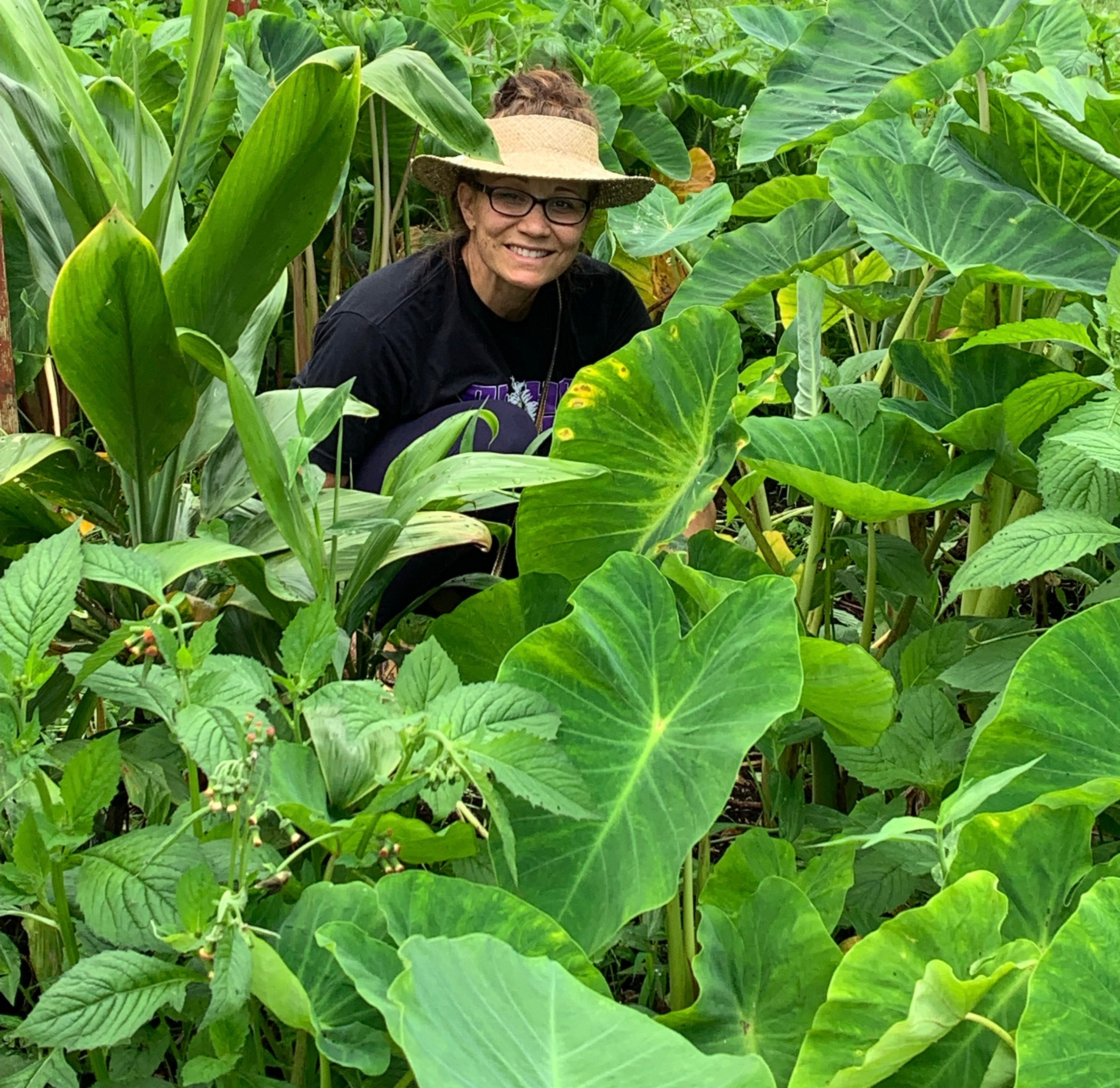
Hāloa Taro Patch
Keauhou-Kona, Hawaiʻi — ʻĀina Pauahi
Kalo (taro) grown at the Alohikea-Smith farm in Keauhou-Kona. Kalo is also known as Hāloanakalaukapalili, the sacred elder brother of Hāloa, progenitor of the Hawaiian people.
Hāloa — Elder Brother of the Hawaiian People
In Hawaiian tradition, kalo is not merely a plant — it is kin. According to the Kumulipo and the sacred genealogies of Hawaiʻi, the god Wākea and Papahānaumoku had Hoʻohōkūkalani, and then with Wākea, Hoʻohōkūkalani conceived a child who was stillborn. From that child's burial place grew the first kalo plant, and they named him Hāloa-naka — the trembling long stalk. Their second child, born living, was the first Hawaiian man, also named Hāloa. Thus the kalo is the elder brother, the firstborn, the ancestor who feeds and sustains all who came after. To tend kalo is to honor that sacred bond — to care for the elder brother who in turn cares for us.


Ola Nā Iwi Hāloa
HALOA / an origin story